Take a Nap
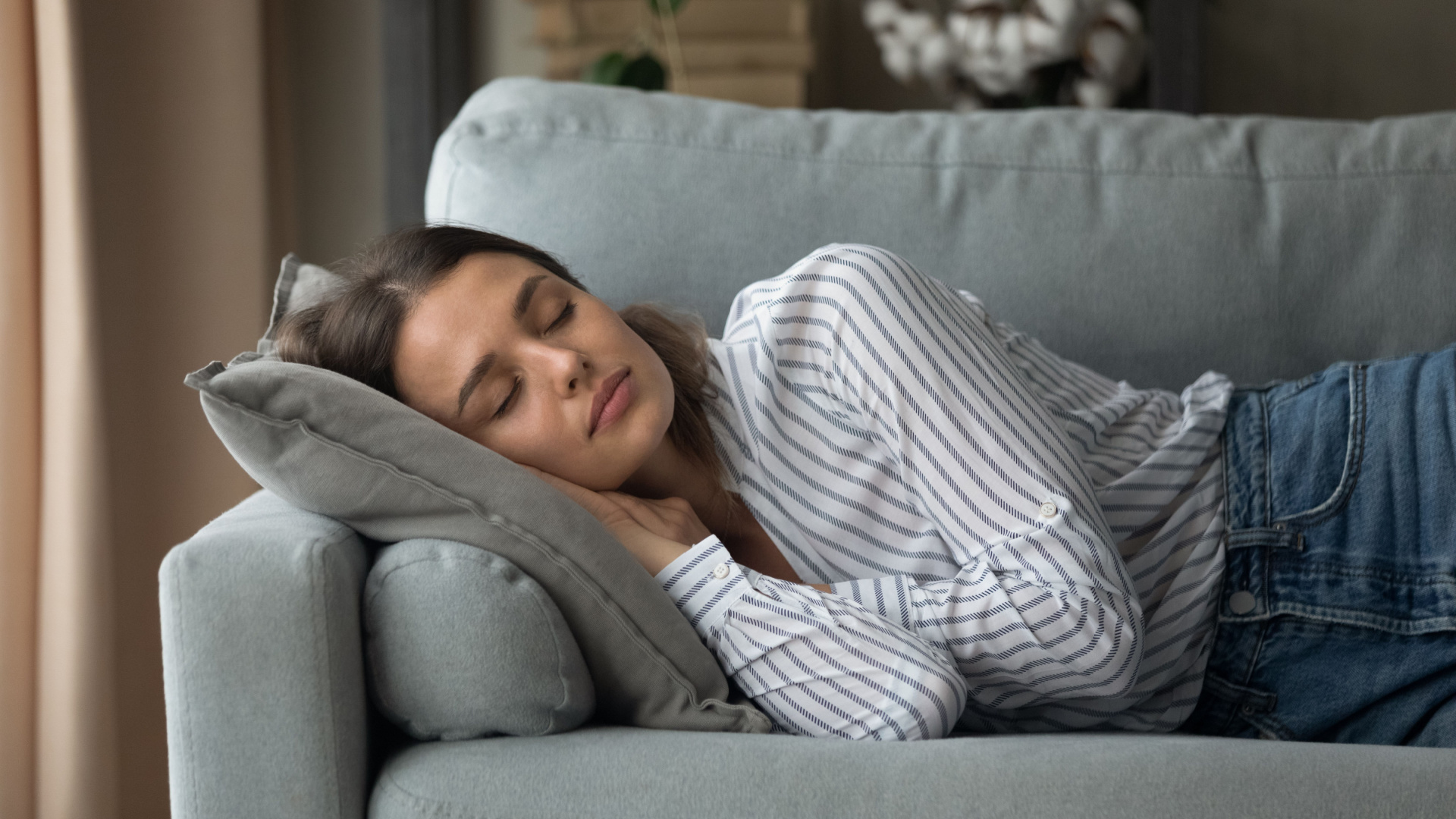
Have you felt stressed today? Do you need to be productive today? Do you want to improve your performance at work? Do you feel tired, sluggish, or depleted? If you answered yes to at least one of these questions, you might need a nap. But before you stop reading because “naps are for children” or “if only I had the time,” let us explain how it works.
Let’s start with a simple experiment; you can try it at home or simply imagine it. What will happen to a sponge once you immerse it in water, add some detergent, and scrub a table for an hour? It’s going to get dirty and soaked and it won’t clean the table anymore until you wash it and let it dry. The same thing happens to your brain after you work for long, intense periods of time; it becomes tired and it stops processing information until you sleep and restore it.
Now let us ask you another question, how many hours did you sleep last night? 8? 7? 6? 5? We won’t go lower than that because adults and young adults should sleep for 7 to 9 hours per night and making up on the weekends does not count (Smith et al., 2020). But what if we told you that regardless of how much you sleep, you can increase your memory and improve your performance with a simple nap? You see, naps used to be a way to escape the hottest hours of the summer and countries like Italy and Spain took advantage of it, but companies around the world are finally understanding that humans need naps to increase productivity irrespective of their culture.
In 1995, a NASA study compared alertness among trans-Pacific airline pilots and found that those who napped experienced a 16% increase in vigilance performance and a 34% increase in reaction times (Rosekind et al., 1995). A later study from the University of California asked 39 healthy young adults to complete a challenging task, which required them to take in a lot of new information, at around mid-day and allowed half of the participants to take a nap at around 2pm (Paddock, 2010). The fascinating part of this study is not that at 6pm the half who took a nap achieved better results than the half who didn’t but that, at night, the volunteers who took a nap had better results than they had had that morning (Paddock, 2010). Furthermore, studies by Harvard, the Sleep Foundation, NASA, and the University of California showed that a short nap of 10-20 minutes both relaxes and rejuvenates our brains by restoring alertness, improving performance, and decreasing mistakes and accidents (Harvard Health Letter, n.d.; Fry, 2020; Rosekind et al., 1995; Paddock, 2010). Why? Because naps enhance learning ability, memory, mood, and mental alertness, enable creative problem solving and logical reasoning, and diminish stress, the risk of making errors on the job, and fatigue (Dvorsky, 2013).
Now, you’ve probably heard that naps also make you feel lazy, right? No. Not if you learn how to power nap. Inertia is only induced when you nap for more than 25 and less than 90 minutes because you’re interrupting sleep cycles instead of waking up before you start a new one (Cooper, 2013; Fry, 2020; Johns Hopkins Medicine, n.d.). Companies such as Google, NASA, Uber, Zappos, Nike, PwC, Ben & Jerry’s, and the Huffington Post are already taking advantage of this through nap pods or rooms (Cassidy, 2017; Dvorsky, 2013; Henry, 2015). But if you still think you don’t have the time, here are some famous nappers who did: Albert Einstein, Eleanor Roosevelt, John F Kennedy, Leonardo da Vinci, Margaret Thatcher, Salvador Dali, and Winston Churchill (The Mattress Firm Sleep Experts, 2017).
Try it out: between 1 and 4pm – as advised by John Hopkins Sleep Disorder Center – take 30 minutes without internet or other distractions for that 10-20-minute nap (Johns Hopkins Medicine, n.d.). You now have the chance to increase productivity and focus while reducing stress. Don’t you want to grab that pillow and start this trend?
References:
Cassidy, A. (2017, December 4). Clocking off: The companies introducing nap time to the workplace. The Guardian. http://www.theguardian.com/business-to-business/2017/dec/04/clocking-off-the-companies-introducing-nap-time-to-the-workplace
Cooper, B. B. (2013, July 25). How Naps Affect Your Brain and Why You Should Have One Every Day. Buffer Resources. https://buffer.com/resources/how-naps-affect-your-brain-and-why-you-should-have-one-every-day/
Dvorsky, G. (2013, September). The science behind power naps, and why they’re so damn good for you. Gizmodo. https://io9.gizmodo.com/the-science-behind-power-naps-and-why-theyre-so-damne-1401366016
Fry, A. (2020, October). Napping: Health Benefits & Tips for Your Best Nap | Sleep Foundation. Sleep Foundation. https://www.sleepfoundation.org/sleep-hygiene/napping
Harvard Health Letter. (n.d.). Napping may not be such a no-no. Harvard Health. Retrieved January 20, 2021, from https://www.health.harvard.edu/newsletter_article/napping-may-not-be-such-a-no-no
Henry, Z. (2015, September 4). 6 Companies (Including Uber) Where It’s OK to Nap. Inc.Com. https://www.inc.com/zoe-henry/google-uber-and-other-companies-where-you-can-nap-at-the-office.html
Johns Hopkins Medicine. (n.d.). Can a Nap Boost Brain Health? Johns Hopkins Medicine. Retrieved January 20, 2021, from https://www.hopkinsmedicine.org/health/wellness-and-prevention/can-a-nap-boost-brain-health
Paddock, C. (2010, February 24). Napping Boosts Brain Power. Medical News Today. https://www.medicalnewstoday.com/articles/180304
Rosekind, M., Smith, R., Miller, D., Co, E., Gregory, K., Webbon, L., Gander, P., & Lebacqz, J. (1995). Alertness management: Strategic naps in operational settings. Journal of Sleep Research, 4(S2), 62–66. https://doi.org/10.1111/j.1365-2869.1995.tb00229.x
Smith, M., Robinson, L., & Segal, R. (2020, October). Sleep Needs—HelpGuide.org. Https://Www.Helpguide.Org. https://www.helpguide.org/articles/sleep/sleep-needs-get-the-sleep-you-need.htm
The Mattress Firm Sleep Experts. (2017, March). 8 Famous Nappers in History. Mattress Firm. https://www.mattressfirm.com/blog/community-culture/8-famous-nappers-history
By: Teresa Aires

Pode também gostar de...


Pais e Filhos